

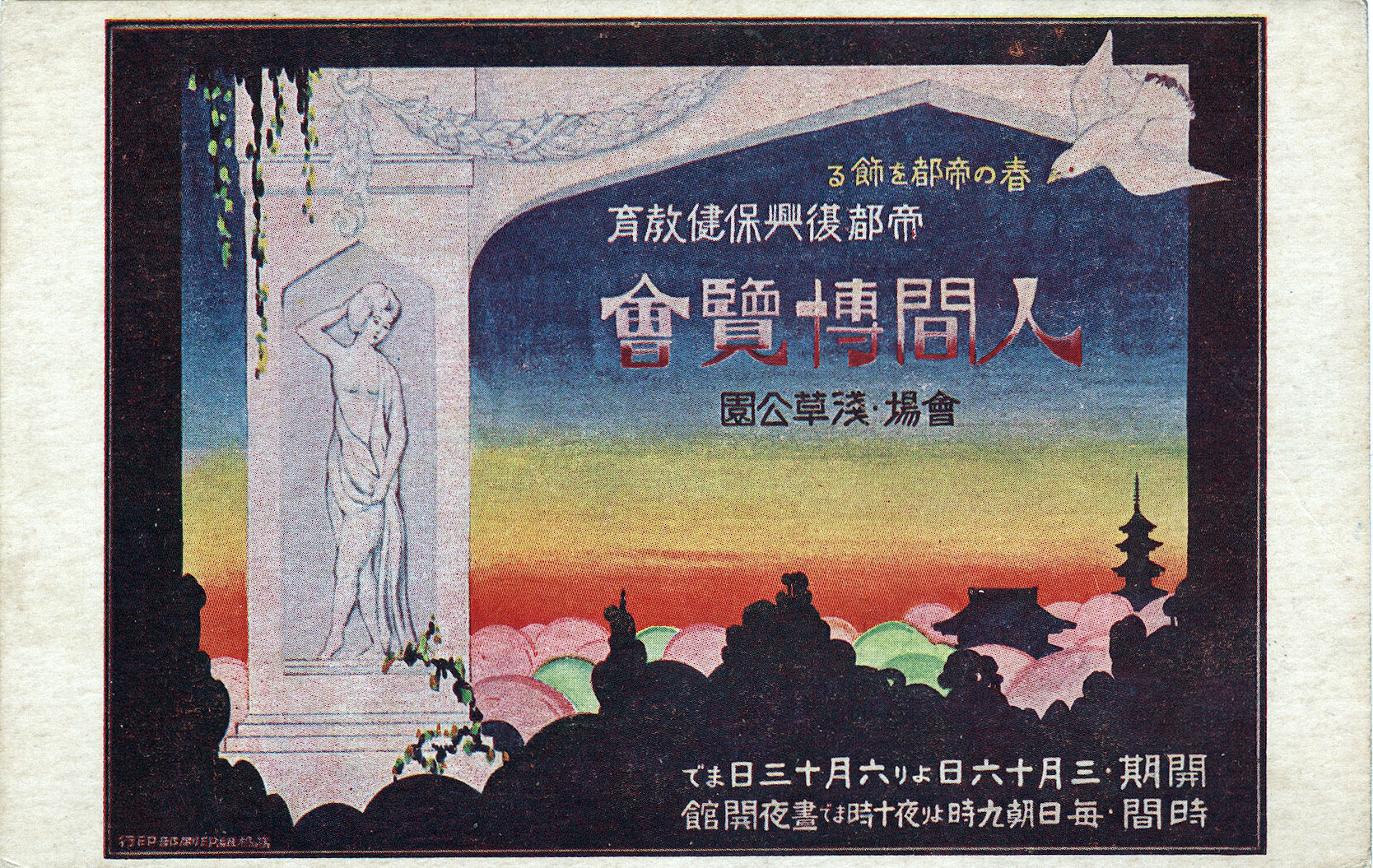
“In Support of the Imperial Capital Health Education” advertising postcard, Asakusa, Tokyo, 1926. The 1923 Great Kanto Earthquake caused the widespread destruction of Tokyo’s water and sewage infrastructure. This public health exhibit, held between March 16-June 13, 1926, was aimed at educating city residents about post-earthquake municipal changes to modern sanitation and hygiene.
See also:
“Earthquake photography”, Tokyo, 1923.
Earthquake refugee camp on the Imperial Palace plaza, Tokyo, 1923.
Aerial view of Shinjuku Gyoen and Nishi-Shinjuku water treatment plant, Tokyo, c. 1960.
The 1923 Great Kanto Earthquake and subsequent fires destroyed 350,000 homes in Tokyo and 90% of homes in nearby Yokohama, leaving thousands homeless. The widespread destruction of city infrastructure and housing exacerbated the risks of disease outbreaks.
The disaster, which destroyed existing water and sewage lines, underscored the vulnerability of the old system. The reconstruction plan included the development and significant expansion of modern, permanent water and sewage systems across Tokyo.
In response, the city government implemented new urban planning and reconstruction efforts to improve public safety and public health. The disaster also highlighted the need for more thorough disaster preparedness. With many homes destroyed and with cramped refugee housing, a surge in the everyday use of municipal sento [public bathhouses] rose in the earthquake’s aftermath – from two to ten – helping to maintain public health.
To serve both the temporary refugee populations and the long-term needs of low-income residents, city authorities promoted the establishment of social welfare facilities, including public bathhouses and dining halls, to improve general hygiene standards and provide essential services.
New housing projects, such as those built by the Dojunkai foundation, incorporated modern amenities like running water and flush toilets, setting new standards for urban living and hygiene.
Chaotic conditions surrounding the management of over 100,000 bodies immediately after the quake led to the development of systematic emergency protocols for mass cremations and organized disposal to prevent the spread of infectious diseases.
Pre-earthquake Tokyo had also been served by only one municipal charity hospital (the others, mostly of religious origins, were considered “private”). After the earthquake, the municipal hospital was rebuilt along with five new charity hospitals located in different parts of the city.