

-
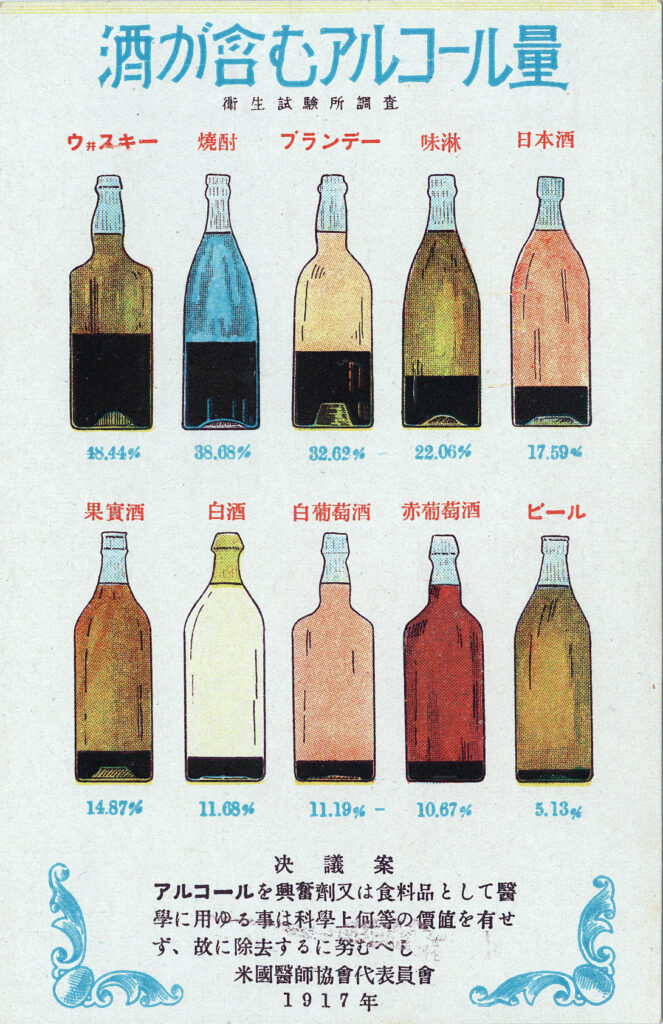
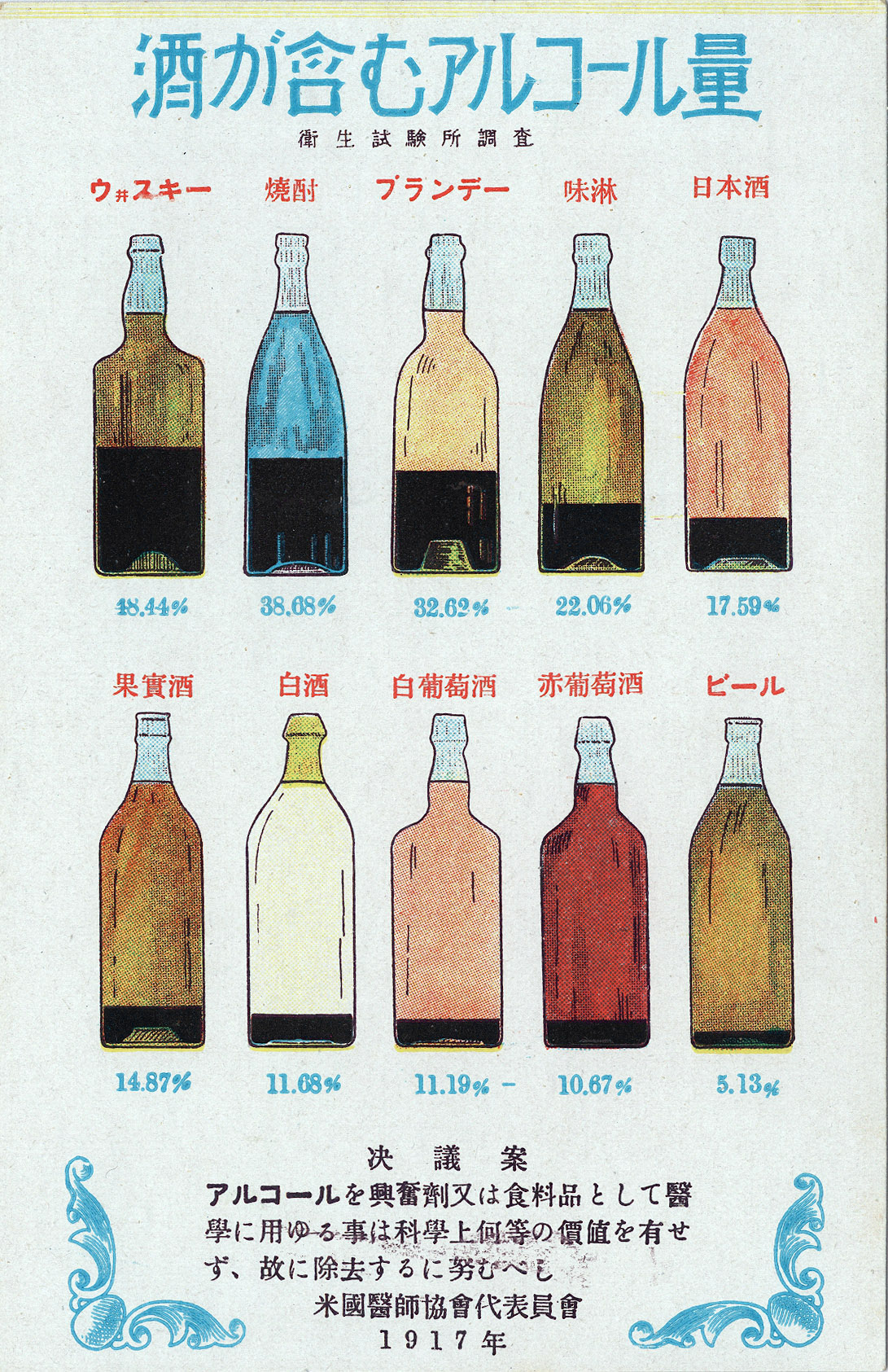
- Comparing the ABV levels of various alcoholic beverages, c. 1920, including beer, sake, brandy and whisky. Caption: “The use of alcohol as a stimulant or foodstuff in medicine has no scientific value, and therefore efforts should be made to eliminate it.” – American Medical Association Council of Representatives, 1917.
-
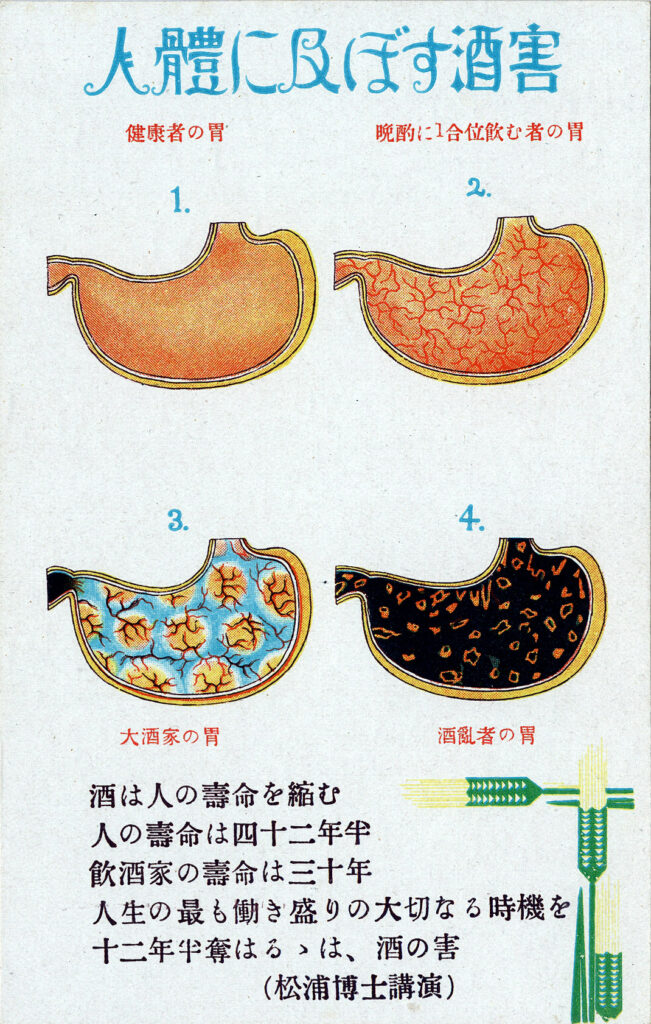
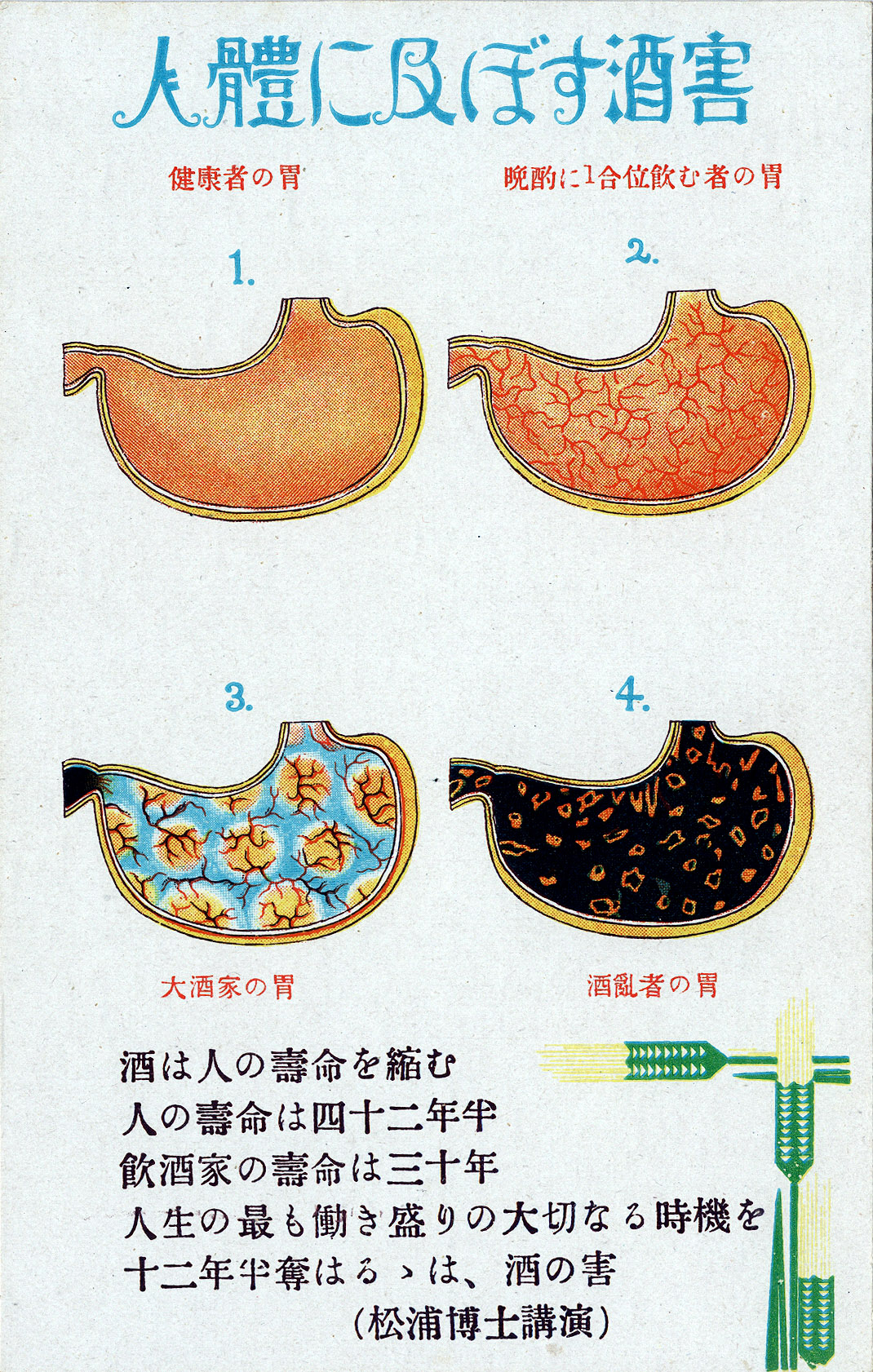
- “Alcohol abuse harmful to the body”, c. 1920. The progression of stomach illnesses brought on by alcoholism is illustrated: 1) Healthy stomach 2) Stomach of a drunkard 3) Stomach of a heavy drinker 4) An alcoholic’s stomach. Caption: “Alcohol shortens one’s lifespan. The average lifespan is 42.5 years, but for heavy drinkers, it is only 30 years.”
“The Japanese, when intoxicated, are seldom quarrelsome. They sing, dance, and are jolly rather than ugly.”
– “Japan and Its Regeneration”, by Dr. Otis Cary, 1908
Although Japan did not enact a nationwide prohibition on alcohol as did the United States, public health campaigns and civil society groups (especially women’s organizations) played a key role in communicating the dangers of alcohol during the interwar years.
Despite a noted drinking culture in Japan, a surprising number of people embraced the foreign concept of alcohol prohibition. Activists in Meiji era Japan observed the US prohibition movement and sought to implement similar measures, although full prohibition ultimately was never enacted in Japan.
The movement gained momentum from the 1880s onward, targeting consumption and sales, and included members of the aristocracy and parliament. Movement leaders used schools, posters, films, exhibitions, and mass media to shape public awareness. However, systemic and cultural obstacles, such as a state reliance on alcohol taxation and the normalization of drinking among men, limited the long-term effectiveness of these health-oriented messages.
In 1922, a bill proposed by Sho Nemoto, a temperance activist, raised the legal drinking age to 20 years or older. It was the only temperance legislation successfully passed before the Pacific War.