

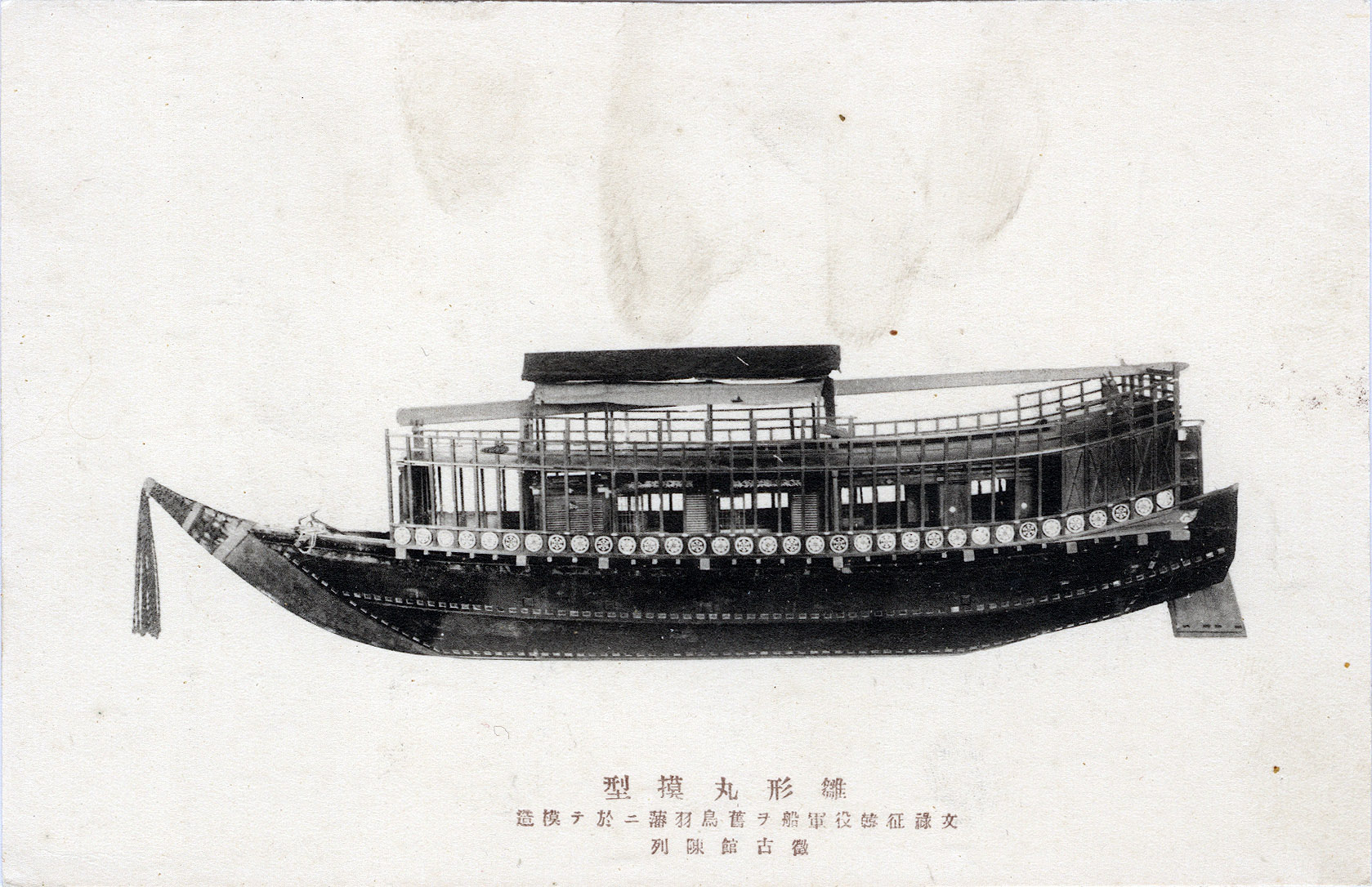
Museum exhibit souvenir postcard of a covered Maruko-bune [Round-bottomed boat], c. 1920, a pole-leveraged cargo vessel unique to Lake Biwa near Kyoto that could also be configured to transport passengers.
See also:
Lake Biwa Canal, Otsu, c. 1910-1920.
The “Incline Lift”, Kyoto, c. 1910.
A Maruko-bune (also spelled Marugata-bune) is a traditional Japanese wooden cargo boat unique to Lake Biwa in Shiga Prefecture.
The name translates to “round-shaped boat”, likely referring to its displacement hull. These shallow-draft vessels were essential for Edo period trade in the area transporting textiles, salt, and rice. The pole-leveraged boats were known for their distinctive hulls, made most often from split cedar logs.
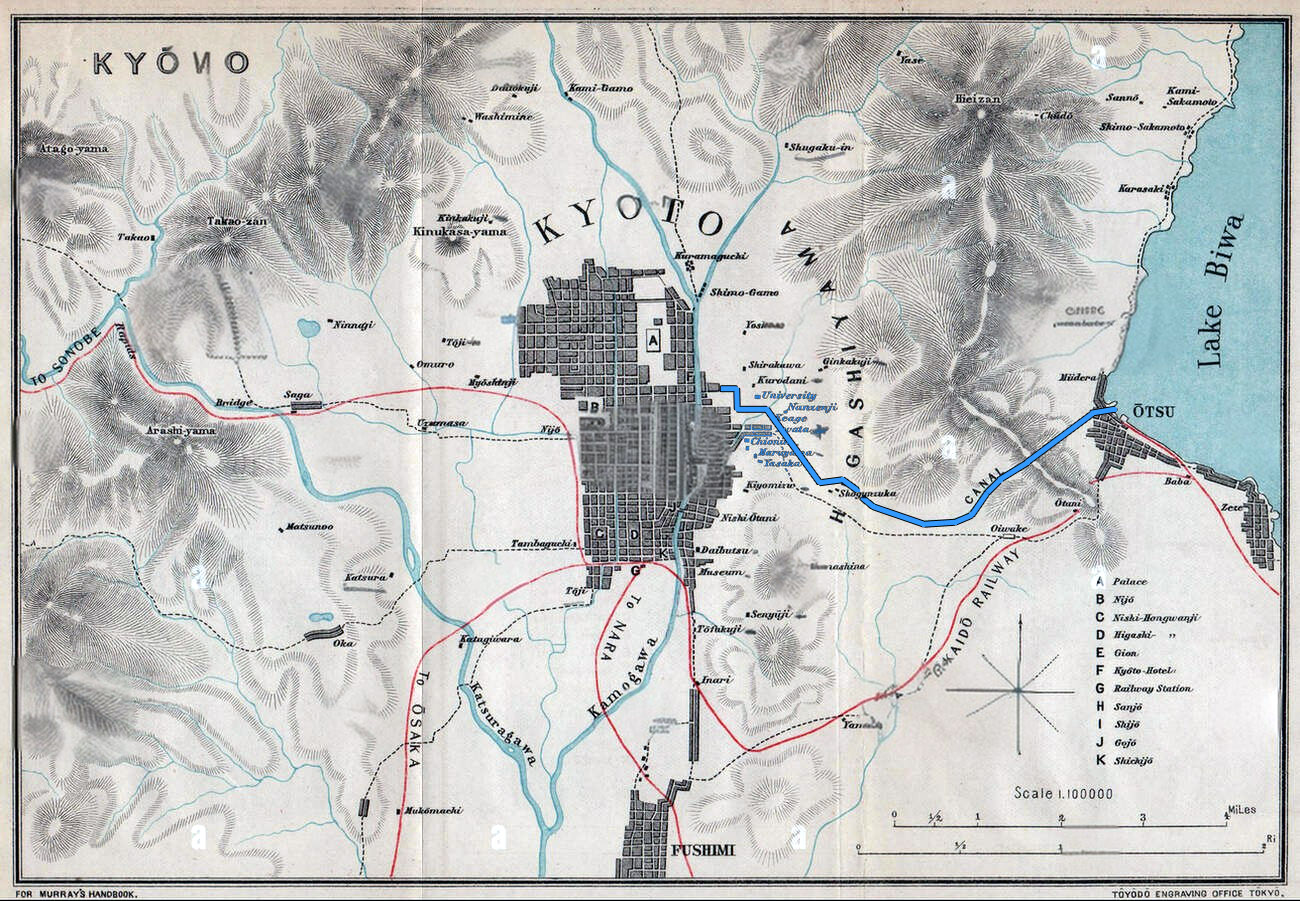
Map: Otsu Canal (in bright blue), Lake Biwa-Kyoto, c. 1910.
During the Edo period (1603-1868), goods from northern provinces were shipped to the imperial capital by sea to Wakasa Bay along the Chūbu region of the Sea of Japan. From there cargo was taken overland to the northern shores of Lake Biwa where it was loaded onto maruko-bune for water transport south on the lake to the port of Otsu, a distance of approximately 60 km (37 miles). Once there, maruko-bune could be piloted further via the tunneled Otsu canal and inclined lift to Kyoto.
During their heyday in the Edo period, over 1,300 maruko-bune were operating on the lake. The 1889 construction of a railroad along the lake’s perimeter significantly decreased water-borne transport; still, hundreds remained in use into the 1930s with a handful still operating into the 1960s. One maruko-bune, later outfitted with an engine, was retired in the late 1990s.
The growing disappearance of suitable wood and the generational loss of foresters who could identify suitable Lake Biwa timbers, mostly cedar, resulted in a gradual manufacturing decline, with most maruko-bune production ended by the 1930s before wartime matérial needs eliminated production entirely.
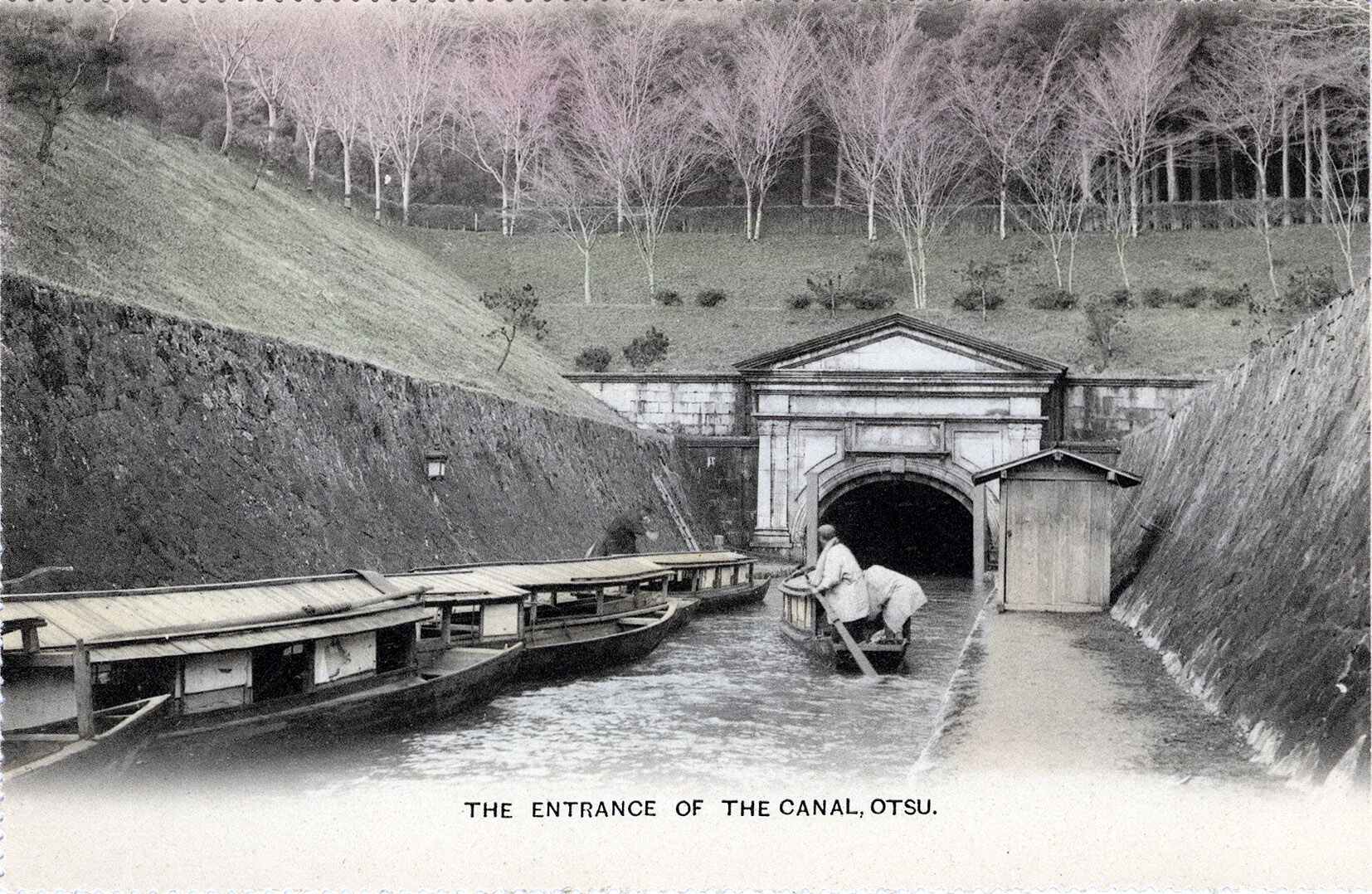
“The entrance of the canal”, Otsu, Kyoto, c. 1920. Maruko-bune are being guided along the length of the tunneled Otsu canal with goods destined for Kyoto.