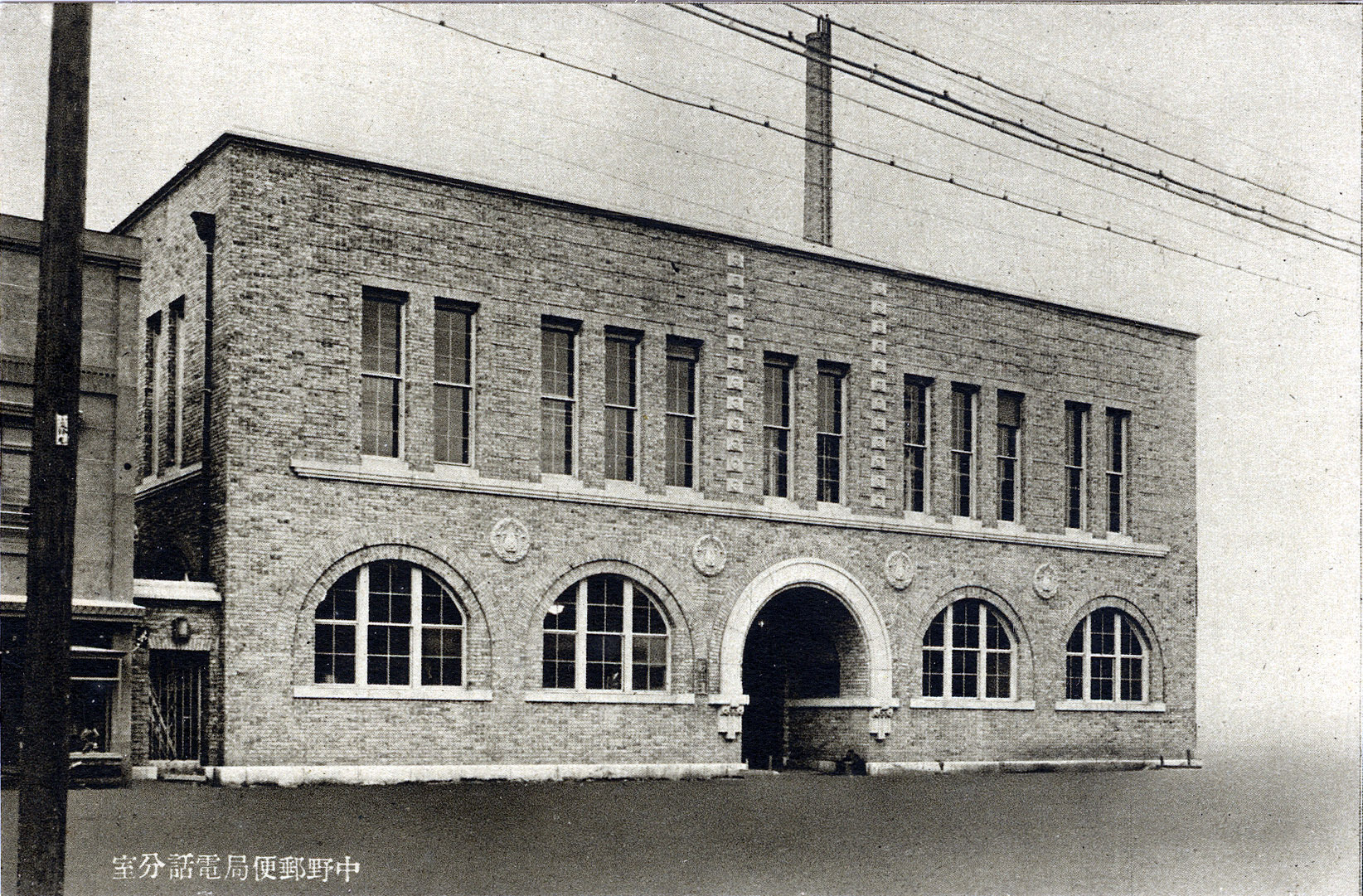

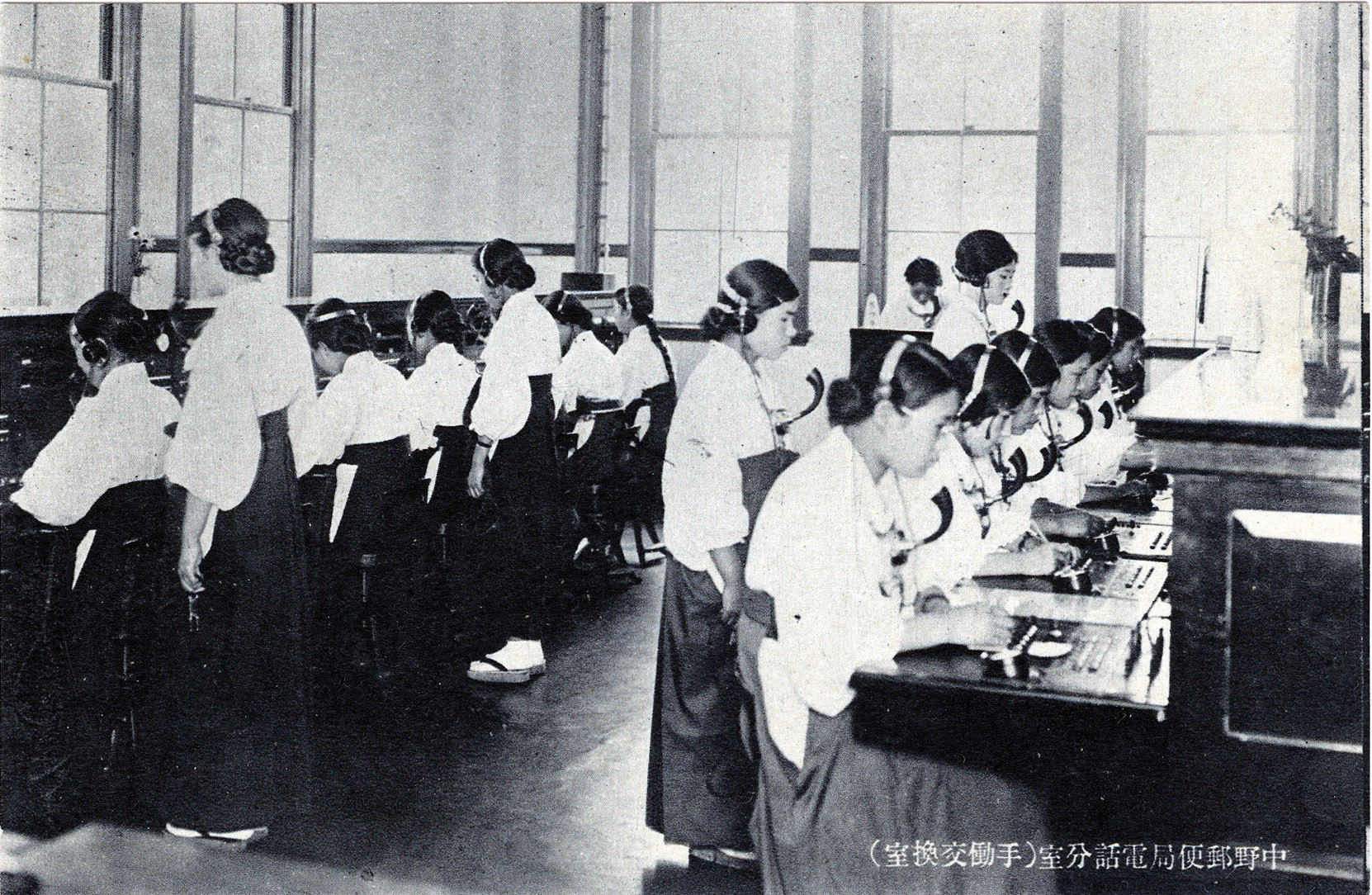
Telephone operators, Nakano Telephone Exchange, Tokyo, c. 1920.
See also:
“Opening of the telephone office” commemorative postcard, Fukushima City, Fukushima Prefecture, 1907.
50th Anniversary of the Telephone, 1926.
The foundation for Japan’s telecommunication industry was laid in 1869 during the Meiji Restoration, a period characterized by rapid modernization and the adoption of Western technologies.
On October 23, 1869, the first telegraph line was constructed between Tokyo (then Edo) and Yokohama, a port city that had become a center of foreign trade. This line became operational in 1870, making Japan one of Asia’s earliest adopters of telegraph technology.
By the 1880s, the Japanese government realized the necessity of expanding the telegraph infrastructure to enhance domestic and international communications. The Ministry of Communications (Teishinsho) was established in 1885 to oversee the expansion of telecommunication services. By the end of the 19th century, Japan had built a comprehensive telegraph network spanning the entire archipelago.
While the telegraph remained the dominant form of long-distance communication at the turn of the 20th century, Japan also began experimenting with the telephone. Bell’s invention of the telephone in 1876 quickly spread worldwide, and Japan established its first telephone line in 1890, just fourteen years later. The line connected Tokyo with Yokohama, echoing the construction of Japan’s first telegraph line.
In 1899, the Japanese government began to develop a public telephone network, recognizing that the telephone offered faster and more accessible communication than the telegraph. Telephone services were initially confined to urban areas, where businesses and government offices could afford to install telephone lines. However, the demand for this new form of communication grew rapidly.
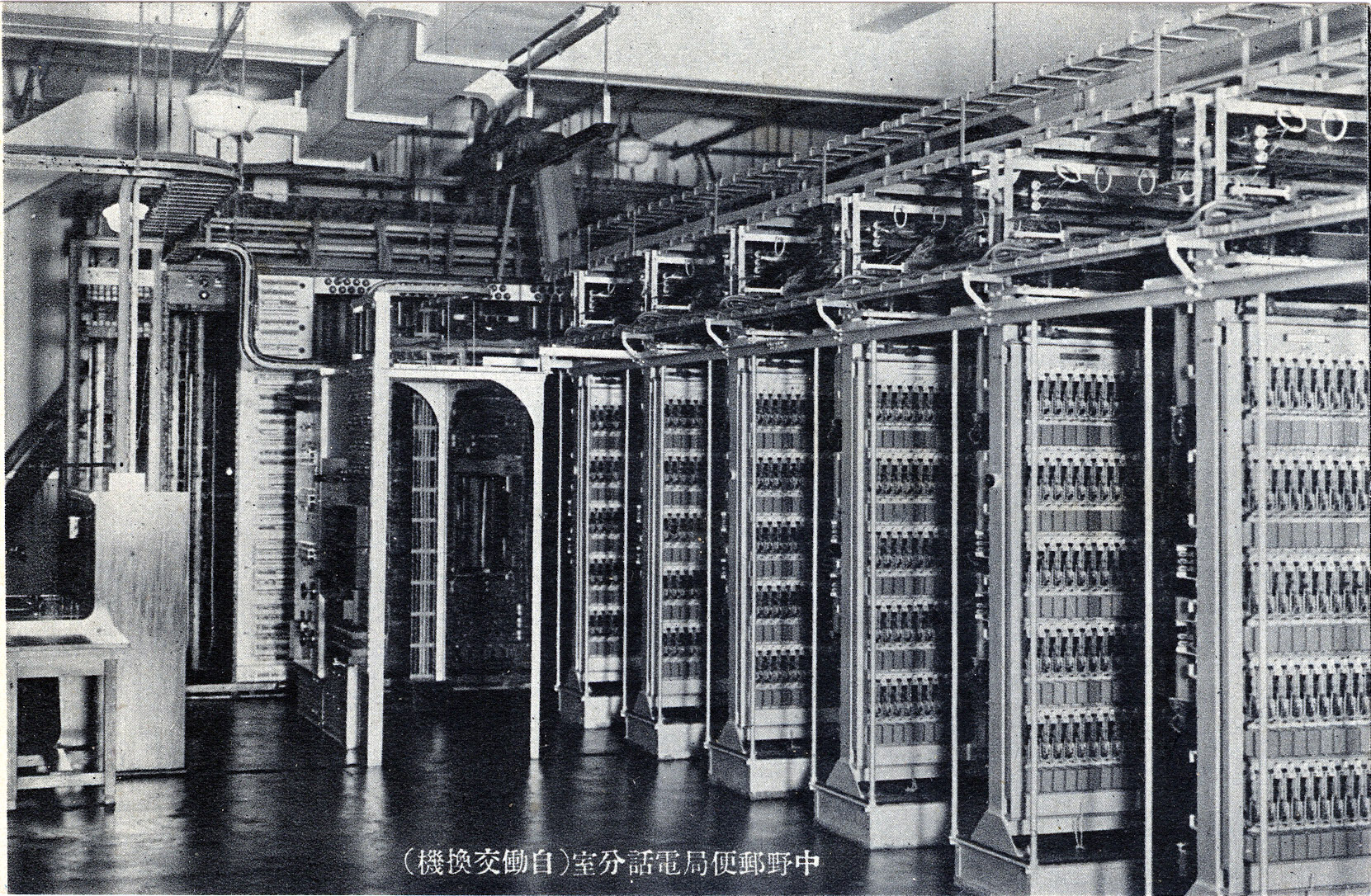
By the 1920s, Japan had significantly expanded its telephone infrastructure. The Ministry of Communications took charge of constructing and operating telephone exchanges, connecting major cities like Osaka, Nagoya, Hokkaido, and Fukuoka. In 1925, Japan introduced automatic exchanges, allowing users to dial numbers directly without operator assistance, further modernizing the telephone network.
-
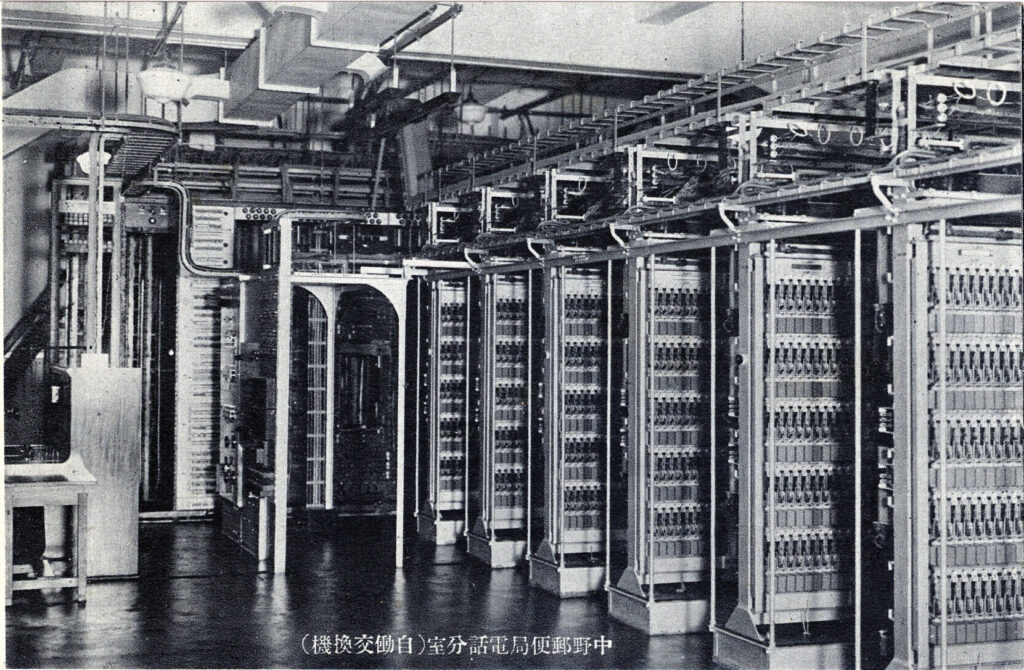
- Automatic switching room, Nakano Telephone Exchange, Tokyo, c. 1920.
-
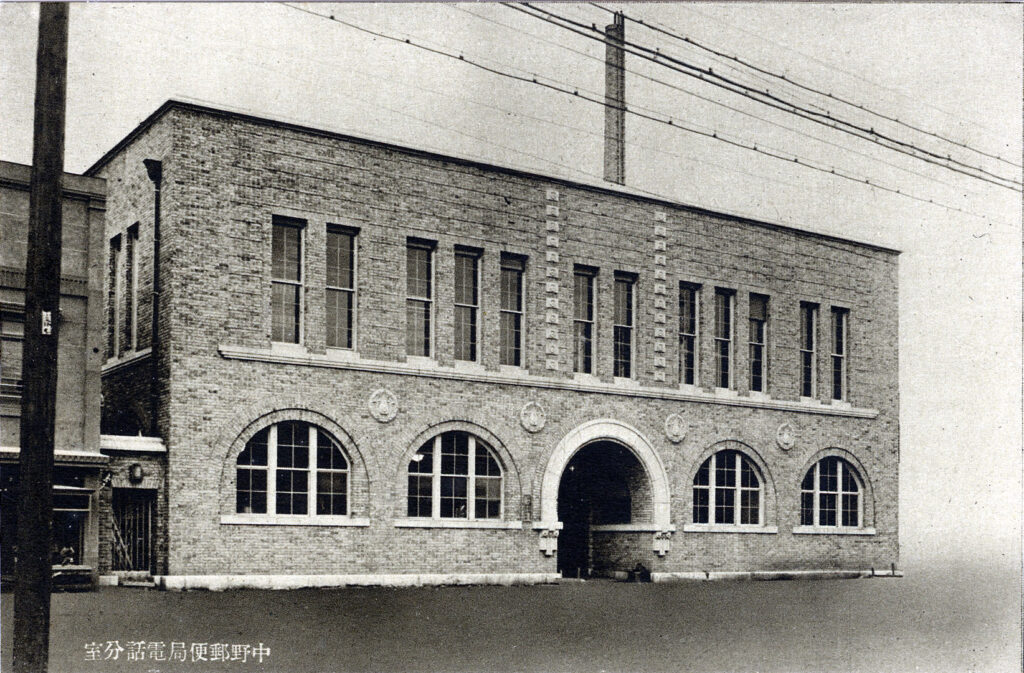
- Branch office, Nakano Telephone Exchange, Tokyo, c. 1920.